Popular Products

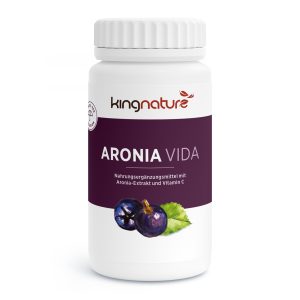
Aronia Vida
CHF 69.00
Histamine is not an invention of modern times. Researchers were already on the trail of this tissue hormone in 1907. in 1920, histamine was verifiably discovered and recognised as a natural substance. The proof that it is an endogenous substance followed.
This is a tissue hormone. It is produced by the body and plays an important role in numerous physiological processes in the organism. Histamine plays a particularly important role in inflammatory reactions of the body and in allergies.
Histamine cannot be limited to one region of the body. Basically, histamine can be found in the mucous membranes, the skin and the lungs. Histamine is also found in the gastrointestinal tract and in the hypothalamus. Since this hormone is also found in some foods, it can be taken orally. Foods containing histamine include red wine, strawberries and yeast.
Histamine is characterised by its versatility. It is a potent mediator. If it is activated, numerous reactions follow. There are different receptors in the body to which histamine can dock (lock-and-key principle). Depending on which receptor the histamine docks on, corresponding reactions begin.
Histamine leads to increased permeability of the blood vessels. Blood pressure drops as a result of vasodilatation. This causes circulatory collapse in allergic reactions. In addition, the production of adrenaline is increased. When histamine has been released, there are typical reactions on the skin with wheals, pustules, itching and redness.
In the bronchial tubes, histamine leads to constriction. This plays a major role in allergic bronchial asthma.
Histamine causes increased production of gastric acid. This makes itself felt in sufferers through so-called reflux and stomach pain.
Histamine is an important player in allergic reactions. Substances that are foreign to the body – or those substances that are recognised as foreign to the body – trigger the release of histamine. This results in itching, redness and swelling. However, the allergic reaction can also become a life-threatening condition. The oedema does not only form on the extremities. The epiglottis can also be affected.
The tissue hormone is significantly involved in the sleep-wake rhythm. Nausea is also triggered by histamine. Animal experiments have also shown that the tissue hormone has an effect on our state of mind. In addition to an antidepressant effect, an anticonvulsant effect could also be demonstrated. It is also likely to be responsible for the regulation of body temperature.


Make sure that the place of delivery and the language correspond to your region. Otherwise, change your selection:
 Switzerland
Switzerland
Switzerland Europe
 More countries
 English
English
English Deutsch
 Français
 Italiano